Published: Sunday 29 March 2026
by Michelle Oliver, Chief OT – Occupational Therapy Australia
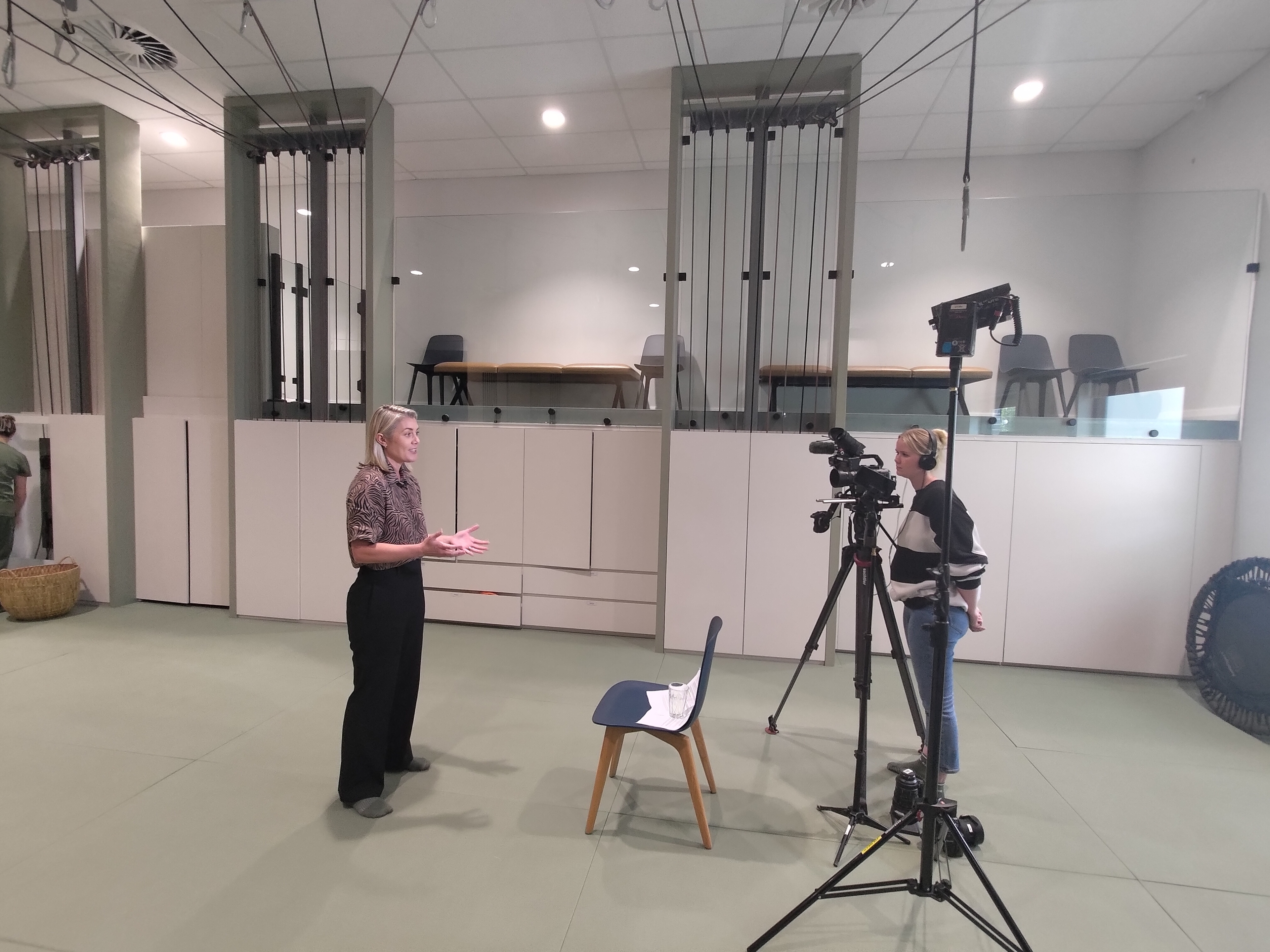
On 26 March, I had the privilege of being interviewed by the ABC to discuss Thriving Kids, at Motivate Kids OT clinic in Adelaide. This interview provided an important opportunity to recognise the potential of the initiative, while also raising critical concerns about the risks of rolling it out without appropriate funding and commissioning models.
When the Government first announced additional resourcing to better support children and families outside the NDIS, OTA welcomed the focus and investment. The evidence is clear that early intervention is highly effective and can be life-changing for children and families. Occupational therapists play a critical role in delivering these supports.
Since the announcement of Thriving Kids, and following the Advisory Group’s recommendations, greater detail about the proposed model has emerged. However, significant questions and gaps remain. As responsibility for design and implementation is being shifted to states and territories, OTA is concerned there may be a departure from the original vision and intent of Thriving Kids.
In particular, we are seeing early signs that Thriving Kids may be positioned as a replacement for existing services, rather than as genuinely additional supports. Children are already being pushed off the NDIS, with access reduced or stopped altogether. Our members are raising serious concerns about the impact this is having on the children and families they work with every day. We cannot remove children from one scheme when there is nowhere else to go.
We have heard politicians say that the NDIS should not be the “only lifeboat in the ocean”. We are seen children being pushed out of the lifeboat into the ocean without a life vest.
Early intervention can fundamentally alter a child’s life trajectory. Timely access to occupational therapy can help children develop essential skills and thrive. Conversely, reducing or cutting access to supports risks long-term, lifelong negative outcomes for children and families.
While the model recommended by the Advisory Group recognises the importance of early intervention, funding and commissioning arrangements may significantly restrict access to OT services. A well-designed model will fail without a workforce to deliver it.
This is a real and immediate risk.
Thriving Kids must be supported by funding models that actively leverage the existing, highly skilled and experienced occupational therapy workforce. When the NDIS was introduced, the disability sector was effectively privatised. Allied health professionals fundamentally changed how they worked, establishing private practices and adapting to a new system. This workforce now holds extensive expertise and is ideally positioned to deliver services under Thriving Kids.
Our members were asked to build this service system - and they have done so successfully. Without suitable funding and commissioning models, there is a real risk that this workforce will be excluded from Thriving Kids, limiting access for families and increasing pressure on education settings, public health services, and families themselves. We risk returning to a system where families are left to navigate barriers and administrative complexity rather than receiving timely support.
There is no single lever that will determine the success of Thriving Kids. However, funding and commissioning are critical, particularly in enabling the workforce to transition into service delivery under this program.
Meaningful opportunities must exist to provide services through funding models that make sense, including:
- universal supports embedded in schools and community settings
- targeted, one-to-one supports for children and families
- service delivery across multiple settings, including homes, schools, communities, and clinics as appropriate for the specific child
This work cannot be one-size-fits-all. Some of the most impactful OT interventions occur in children’s homes. The lessons learned from NDIS travel funding cuts must be applied here.
The right support is timely, high-quality care, delivered by a skilled and qualified professional, in the setting that best meets the child and family’s needs.
We have a highly skilled, experienced, and dedicated occupational therapy workforce that is ready to go. But funding alone does not deliver care – the workforce does. Without occupational therapists on the ground, families will not feel the benefits of Thriving Kids.
Read more in the ABC’s coverage of this issue.